AI, Eugenics, Genetics, Gene Editing, CRISPR - is transhumanism the end goal ? Can AI take over the conscience?
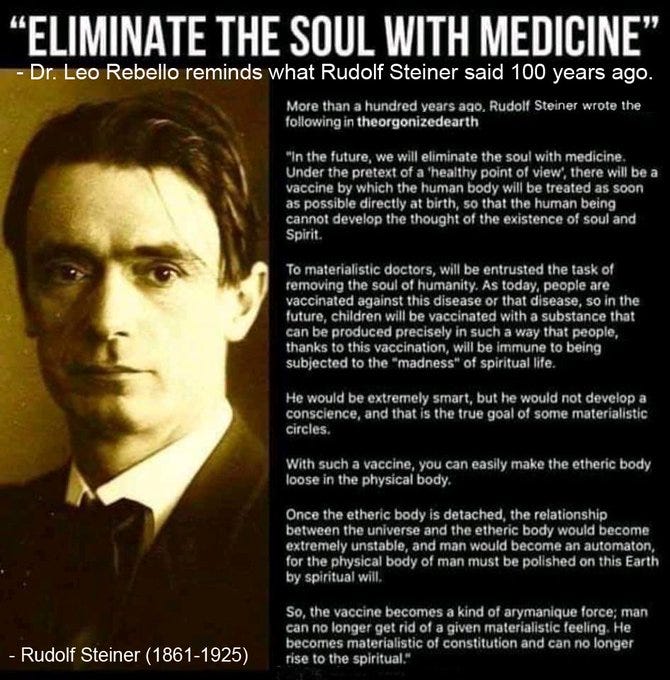
Rudolf Steiner is credited to have said this: “In the future, we will eliminate the soul with medicine”. Of how things are headed now with AI, Gene Editing, we seem to be on the path to eliminate the soul with the objective of controlling the human species.
“In the future, we will eliminate the soul with medicine. Under the pretext of” a healthy point of view “there will be a vaccine by which the human body will be treated as soon as possible, right at birth, so that the human being cannot develop the thought of the existence of the soul and the Spirit.
Then the vaccine becomes a kind of arimanic force; man can no longer get rid of the materialistic sentiment that has been given to him. He becomes materialistic in constitution and can no longer elevate himself to the spiritual. “
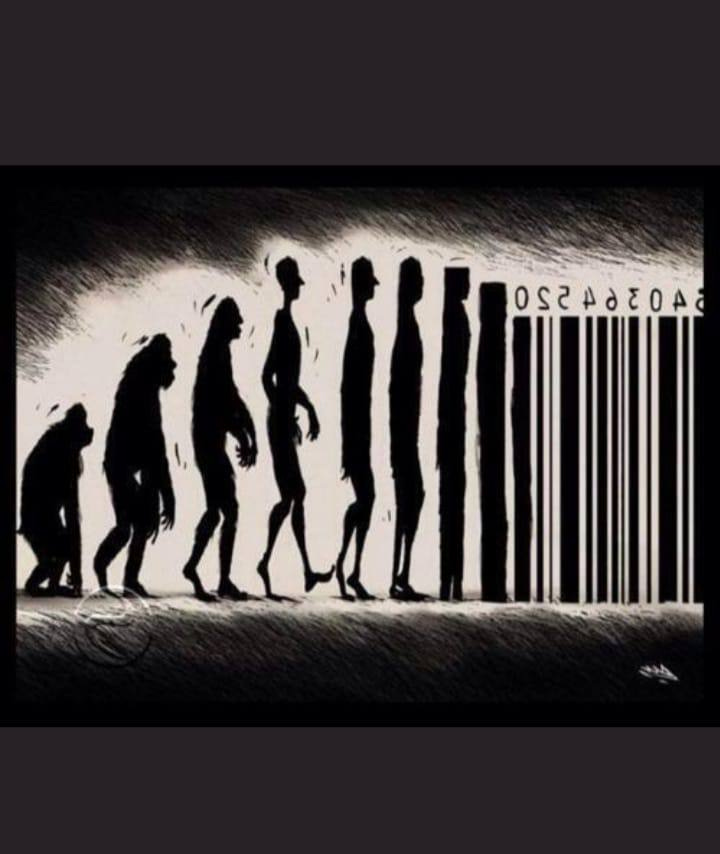
The way to control would be via medicines, vaccines, food and other ways that we possibly cannot imagine of now.
Materialistic physicians will be entrusted with the task of bringing out the soul of humanity. As today, people are vaccinated against this or that disease, so in the future, children will be vaccinated with a substance that can be produced precisely in such a way that people, thanks to this vaccine, will be immune to being subjected to the “ madness “of spiritual life.
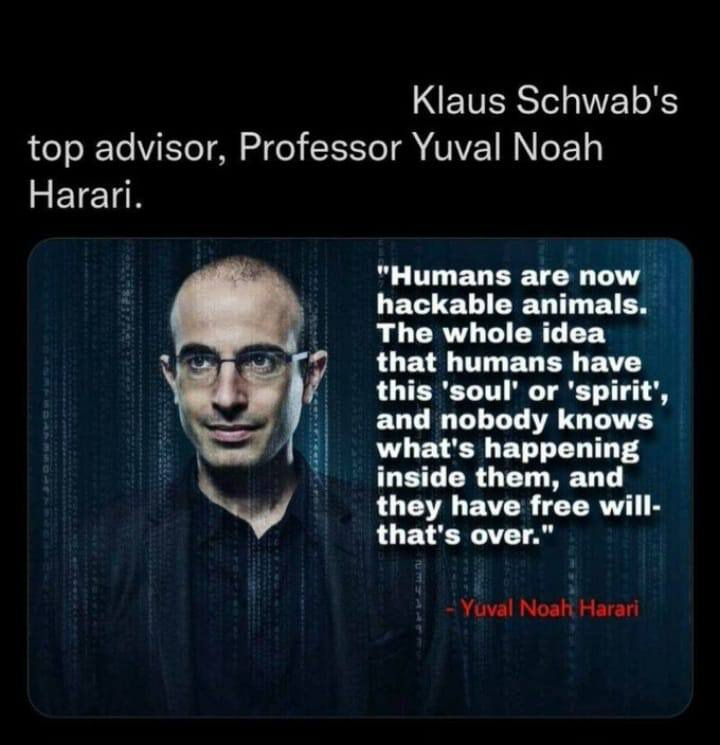
Yuval Noh Harari has also warned “Humans are now hackable animals”
Drugs
MKUltra was an illegal human experimentation program designed and undertaken by the U.S. Central Intelligence Agency (CIA) to develop procedures and identify drugs that could be used in altering human behavior

Operation Midnight Climax was a 1950s-era CIA Wikipedia sub-project of the illegal MKUltra mind-control program. It involved hiring prostitutes to lure men to safehouses, where they were dosed with LSD to study the drug's effects on human behavior in social situations, with sessions often recorded. The operation was overseen by CIA technical officer Sidney Gottlieb. The project ran from the 1950s until it was shut down in the late 1960s.
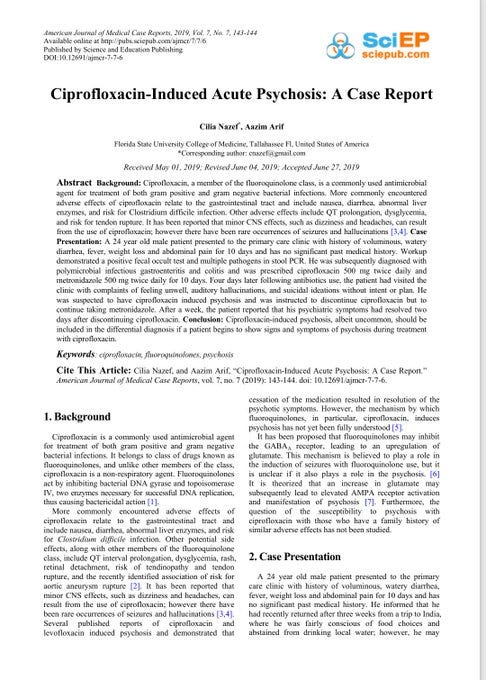
Antibiotics
24 year old male developed auditory hallucinations, and suicidal ideations four days after taking antibiotic Ciprofloxacin.
Vaccination
Project Artichoke explored the use of vaccines to deliver substances that induce anxiety, depression, lethargy and hopelessness. Project Artichoke.” A chilling blueprint for mind control through covert drugging. What if it’s still happening today?
Project Artichoke ran from 1951 to 1956,. The agency launched Artichoke as a top-secret initiative focused on interrogation, behavior control, and mind manipulation. It wasn’t just about extracting confessions, it was about reprogramming people entirely. Substances designed to create “agitating effects” or “depressing effects” (despondency, hopelessness, lethargy). The goal? Subtly erode someone’s mental state, making them more pliable or unstable without them knowing why.
Are They Using Gene Therapy Injections To Push 4th Industrial Revolution & Transhumanism Agenda ?
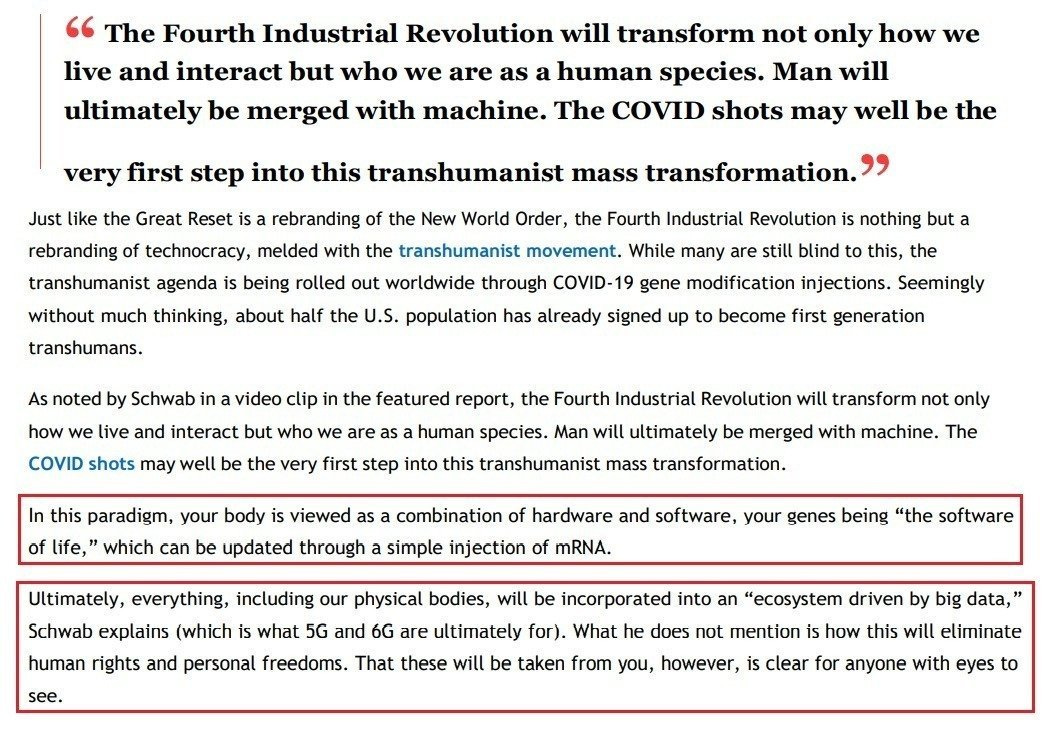
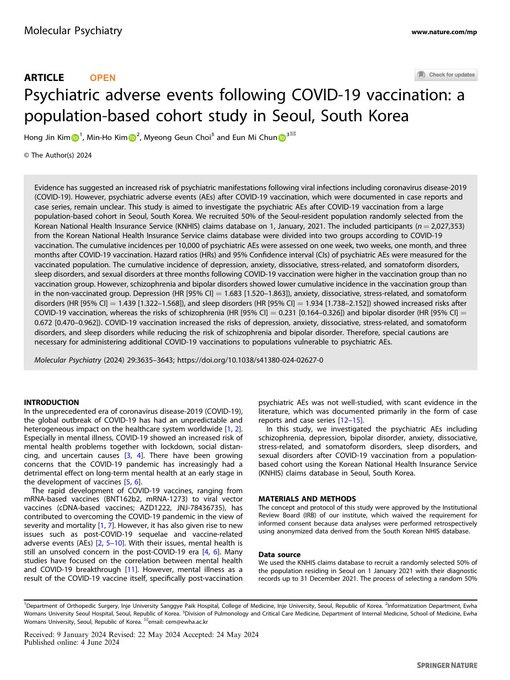
COVID-19 vaccination increased the risks of depression, anxiety, dissociative, stress-related, and somatoform disorders, and sleep disorders.
“One of the few things which is more controversial than linking vaccination to autism is linking vaccination to transgenderism”
Digital Vaccines
Digital vaccines are an emerging concept where AI is used to influence behaviour and prevent disease. How does it work, and why are scientists exploring this new approach?
Gene Editing
Genome editing technologies enable scientists to make changes to DNA, leading to changes in physical traits, like eye color, and disease risk. Scientists use different technologies to do this. These technologies act like scissors, cutting the DNA at a specific spot.
CRISPR is a gene editing technology used to make precise changes to DNA in living organisms—like cutting and modifying specific genes in plant, animal, or human cells, as seen in gene therapy or modifying immune cells for cancer treatment.
Gene Editing in Agriculture
Gene editing in agriculture, primarily using CRISPR-Cas9, supposedly enables precise, rapid modifications to crop DNA to improve traits like disease resistance, climate resilience, and nutritional quality.
Genome editing technologies: particularly CRISPR, are rapidly escaping the boundaries of controlled laboratories and entering open ecological systems through advances in delivery mechanisms like viral vectors, nanoparticles, and ribonucleoprotein complexes
https://www.sciencedirect.com/science/article/pii/S0147651325019104
Gene Editing in Humans
In 2015 scientists called for a partial ban on genome editing in human germline cells. This call was a response to the rapid development of the CRISPR–Cas9 system, a molecular tool that allows researchers to modify genomic DNA in living organisms.
Ever since the manipulation of DNA in biological systems became a possibility in the 1970s the technology has been in the spotlight of both academic and public discussions. There are spikes in the amount of attention the field gets, which usually correlate with the development/announcement of new methods and projects. One such spike could be observed in the early 1990s when the first gene therapy trials were conducted. In recent years a new spike in attention could be observed, this time triggered by the fast emergence of the CRISPR–Cas9 system and the possibilities it offers for editing genomic DNA in living cells.
Human Cloning
Human cloning is closer than you think. The February 2001, Time magazine cover story by Nancy Gibbs explored the imminent, yet controversial, potential for reproductive human cloning.

Artificial womb
EctoLife is a widely publicized, speculative conceptual design for the world's first artificial womb facility, proposed by biotechnologist Hashem Al-Ghaili to allow for full, gestation-outside-the-body for up to 30,000 lab-grown babies annually.
Immortality & Consciousness
What is the idea of quantum immortality?
The idea is - Every time you could die, reality splits. In one branch, you're dead. In the other, you survive. Since you can only experience consciousness where you're alive, from your perspective, you never die.
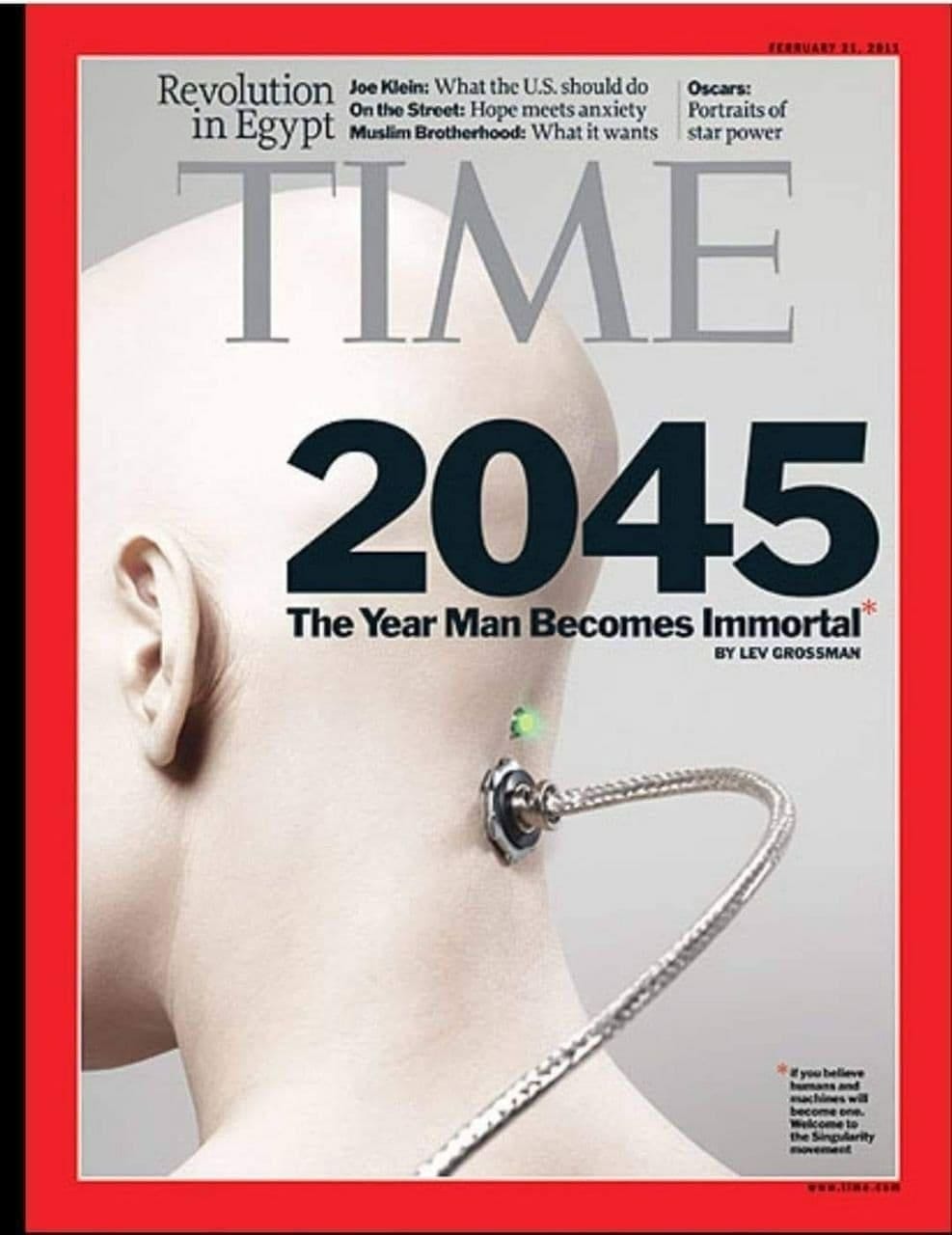
Are we approaching a moment when computers will become intelligent, and not just intelligent but more intelligent than humans. When that happens, humanity — our bodies, our minds, our civilization — will be completely and irreversibly transformed?
https://time.com/archive/6595274/2045-the-year-man-becomes-immortal/
Project Lazarus
Many people my not be aware that Meta invested on Project Lazarus to create an AI that would post for dead people. Though Meta said they have no plans to develop it, the technology if implemented would let AI simulate your social media activity after you die, trained on your posts, comments, likes, and messages. The patent describes generating responses, engaging with posts, and even handling DMs.
Digital Resurrection
Following his death in 2025 from throat cancer, Hollywood filmmakers are using generative AI to resurrect Val Kilmer for the film As Deep as the Grave. With his estate’s approval, a photorealistic digital version of Kilmer was created from archives and personal photos to play a role he was unable to film due to illness
Multi-Behavior Brain Upload
The recent assembly of the adult Drosophila melanogaster central brain connectome, containing more than 125,000 neurons and 50 million synaptic connections, provides a template for examining sensory processing throughout the brain. That model predicted motor behavior at 95% accuracy.
The idea is to fully map your brain and run it in a simulation.
https://www.nature.com/articles/s41586-024-07763-9
Neuralink
Musk is a vocal advocate of transhumanism — a key globalist vision — aiming to create ‘superhumans’ through Neuralink’s brain-computer interfaces (BCIs) connected to AI. It aligns with WEF founder Klaus Schwab’s vision of human augmentation: fusing body, mind and technology through AI, genetic editing and neural prosthetics
But what about consciousness and awareness?
Is Claude Conscious? Anthropic CEO Says Possibility Can’t Be Ruled Out
When the head of one of the world’s leading AI companies says he cannot rule out the possibility that his chatbot might one day be conscious, it inevitably raises eyebrows. In a recent interview with the New York Times, Dario Amodei, the chief executive of Anthropic, acknowledged that researchers do not yet know whether advanced AI systems could develop something resembling consciousness. His comments have reignited a long-running debate at the heart of the race to build more powerful artificial intelligence, also known as artificial general intelligence or super intelligent system.
Demis Hassabis, (AI) researcher and entrepreneur says today's AI lacks consciousness, but self-awareness could emerge "implicitly."
What is the future of AI?
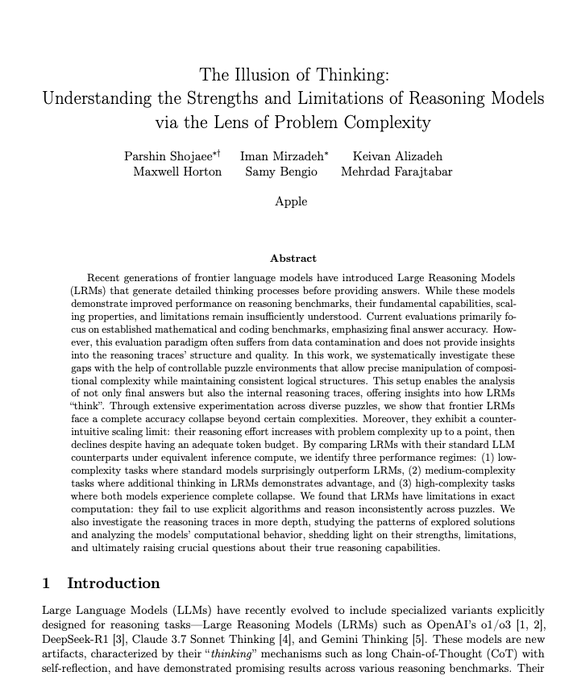
Apple has published a paper with a devastating title: *The Illusion of Thinking*. What it demonstrates is that the AI models we use every day - don’t think. The fundamental capabilities and limitations of AI are getting noticed.
Nvidia CEO Jensen Huang advocates for a balanced approach to AI, supporting caution (warning) while discouraging alarmism (scaring). He argues that extreme, unevidenced apocalyptic predictions about AI are counterproductive, potentially slowing down vital technological development and investment. Huang emphasizes AI's role in filling labor shortages, enhancing human work, and providing significant, beneficial economic opportunities.
“…there’s a fundamental level of risk associated with the Singularity that’s impossible to refine away, simply because we don’t know what a highly advanced artificial intelligence, finding itself a newly created inhabitant of the planet Earth, would choose to do. It might not feel like competing with us for resources. One of the goals of the Singularity Institute is to make sure not just that artificial intelligence develops but also that the AI is friendly. You don’t have to be a super-intelligent cyborg to understand that introducing a superior life-form into your own biosphere is a basic Darwinian error”.
https://time.com/archive/6595274/2045-the-year-man-becomes-immortal/
Does Conscious AI exist?
The potential capabilities and limitations of machines have been a contentious issue since the inception of computing technology. From Turing’s famous question “Can machines think?” (Turing, 1950) to the issue of attributing mental states to machines (McCarthy, 1979), the classic Chinese Room argument (Searle, 1980), attempts to operationalise “machine consciousness” (Wasiewicz and Szuba, 1990), and theses on the limitations of computers (Dreyfus, 1992)—these are prominent examples of the academic debates about the qualities of technological entities.
https://www.nature.com/articles/s41599-025-05868-8
The Future?
As Rudolf Steiner says, the spiritual forces which are intuitive, and rooted in human or divine consciousness may still thrive.
“They would be extremely intelligent, but they would not develop consciousness, and that is the true goal of some materialistic circles. With such a vaccine, you can easily make the etheric body detach from the physical body. Once the etheric body separates, the relationship between the universe and the etheric body would become extremely unstable, and man would become an automaton, because the physical body of man must be polished on this Earth by spiritual will”.
References:
https://link.springer.com/article/10.1007/s11948-017-9931-1#Fn2
https://link.springer.com/article/10.1007/s10806-018-9721-z
https://archive.4plebs.org/pol/thread/417337998
https://www.nytimes.com/2026/02/12/opinion/artificial-intelligence-anthropic-amodei.html
https://thereader.mitpress.mit.edu/the-soviet-unions-desperate-efforts-at-mind-control/
https://www.planetmindcontrol.com/

